Here's why:
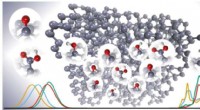
* Covalent bonds form when atoms share electrons to achieve a stable electron configuration. In NH3, the nitrogen atom (N) shares its electrons with three hydrogen atoms (H). This sharing creates a stable configuration for both nitrogen and hydrogen.
* Ionic bonds form when one atom completely transfers an electron to another atom, creating positively and negatively charged ions that are attracted to each other. This doesn't happen in NH3.
In summary: The bonds in NH3 are formed by the sharing of electrons, making them covalent bonds.