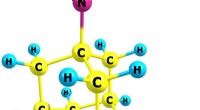
* Composition: All three states of matter are composed of atoms and molecules.
* Intermolecular forces: All three states of matter experience intermolecular forces, which are the attractive forces between molecules.
* Constant motion: The particles in all three states of matter are in constant motion. This motion is just different in each state.
Here's a summary table:
| State of Matter | Particle Arrangement | Particle Motion | Intermolecular Forces |
|---|---|---|---|
| Solid | Closely packed, highly ordered | Vibrate in fixed positions | Strong |
| Liquid | Closely packed, less ordered | Can move past each other | Moderate |
| Gas | Widely spaced, disordered | Free movement, high speed | Weak |
In conclusion: While the arrangement, movement, and strength of intermolecular forces are different in each state of matter, the underlying components (atoms and molecules) are the same.