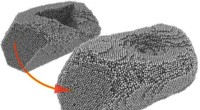
* Hook side: Made of tiny hooks made from nylon or polyester fibers. These hooks are typically woven or knitted together to form a fabric-like structure.
* Loop side: Made of soft, looped nylon or polyester fibers. These loops are also woven or knitted into a fabric-like structure.
The hooks on the hook side interlock with the loops on the loop side, creating a strong, temporary bond.
Therefore, the chemical structure of Velcro is determined by the polymer chains that make up the nylon or polyester fibers used in its construction. These polymers have specific chemical structures that contribute to the properties of the fibers:
Nylon:
* Repeating unit: -(CH2)6-NH-CO-(CH2)4-CO-NH-
* Structure: Long chains of amide linkages (CO-NH) connecting hydrocarbon segments.
* Properties: Strong, durable, abrasion-resistant.
Polyester:
* Repeating unit: -(-OCH2CH2-O-CO-C6H4-CO-)n-
* Structure: Long chains of ester linkages (-CO-O-) connecting hydrocarbon segments.
* Properties: Strong, wrinkle-resistant, water-resistant.
It's important to note that the specific chemical composition of the nylon or polyester fibers used in Velcro can vary depending on the manufacturer and intended application. However, the underlying principle of interlocking hooks and loops remains the same.