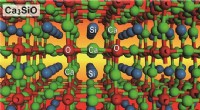
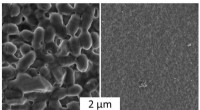
* Crystals are natural solid materials with a highly ordered, three-dimensional arrangement of atoms or molecules. This internal structure is known as a crystal lattice.
* The repeating pattern of atoms within a crystal lattice defines the unit cell, the basic building block of the crystal.
* The arrangement of the unit cells determines the external shape of the crystal, leading to the distinct geometric forms we recognize.
Here are some key points about crystals:
* Crystal Habit: The external shape of a crystal is called its habit. Common habits include cubic, hexagonal, prismatic, and tabular.
* Crystal Faces: The flat surfaces of a crystal are called faces.
* Crystal Edges: The lines where two crystal faces meet are called edges.
* Crystal Angles: The angles between crystal faces are always constant for a given mineral, providing a key identification feature.
Examples of common crystal forms:
* Quartz: Typically hexagonal prisms with pyramid-shaped terminations.
* Halite (Salt): Cubic crystals.
* Calcite: Rhombohedral crystals.
* Diamond: Octahedral crystals.
Why do crystals form?
Crystals form when the atoms or molecules of a substance have enough time and space to arrange themselves in an orderly pattern. This typically occurs during:
* Cooling and solidification of a molten substance: Magma and lava cool and solidify to form igneous rocks, often with crystals within.
* Precipitation from a solution: As a solution becomes saturated, the excess dissolved substance precipitates out, forming crystals.
* Solid-state transformation: Minerals can transform from one form to another due to changes in temperature, pressure, or chemical environment.
Let me know if you have any more questions!