* Potassium sulfate (K₂SO₄): This is a white, soluble salt.
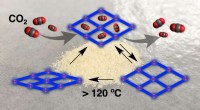
* Carbon dioxide (CO₂): This is a colorless, odorless gas.
* Water (H₂O):
The balanced chemical equation for this reaction is:
K₂CO₃ (aq) + H₂SO₄ (aq) → K₂SO₄ (aq) + CO₂ (g) + H₂O (l)
Here's what happens:
1. Acid-base reaction: Sulfuric acid (H₂SO₄) is a strong acid, and potassium carbonate (K₂CO₃) is a base. The acid donates hydrogen ions (H⁺) to the base, forming carbonic acid (H₂CO₃).
2. Decomposition: Carbonic acid is unstable and quickly decomposes into carbon dioxide (CO₂) and water (H₂O).
3. Gas formation: The carbon dioxide gas bubbles out of the solution, often causing fizzing or effervescence.
Observation: The reaction is quite vigorous, with the release of carbon dioxide gas. The solution will likely heat up slightly as well.