* Spontaneous Reactions: These reactions happen on their own, without the need for continuous external energy input. They tend to proceed towards a lower energy state.
* Endothermic Reactions: These reactions absorb heat from their surroundings. This means they require an input of energy to occur.
Why Endothermic Reactions Aren't Spontaneous:
* Thermodynamics: The spontaneity of a reaction is governed by a concept called Gibbs Free Energy (ΔG). For a reaction to be spontaneous, ΔG must be negative.
* ΔG Equation: ΔG = ΔH - TΔS
* ΔH is the enthalpy change (heat absorbed or released)
* T is the temperature in Kelvin
* ΔS is the entropy change (change in disorder)
* Endothermic Reactions and ΔG: Since endothermic reactions have a positive ΔH (they absorb heat), the ΔG value can only be negative if the entropy change (ΔS) is large enough and the temperature is high enough to overcome the positive ΔH.
Examples of Endothermic Reactions:
* Melting ice: Requires heat to break the bonds holding the water molecules in a solid state.
* Photosynthesis: Plants absorb sunlight to convert carbon dioxide and water into glucose and oxygen.
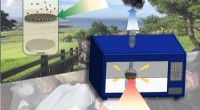
Important Note: While endothermic reactions are generally not spontaneous under standard conditions, they can be made to occur with the input of sufficient energy. This energy can be provided by:
* Heat: Raising the temperature can provide the activation energy needed to overcome the energy barrier.
* Other Forms of Energy: Light, electricity, or mechanical energy can also drive endothermic reactions.