Here's a breakdown of what makes a crystal:
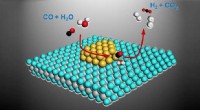
* Orderly Arrangement: The atoms or molecules in a crystal are arranged in a highly organized and repeating pattern, forming a three-dimensional lattice structure.
* Long-range Order: This repeating pattern extends over long distances within the crystal, unlike amorphous solids where the arrangement is random.
* Solid State: Crystals are typically solid at room temperature, though they can be found in liquid or even gas forms under specific conditions.
Examples of crystals include:
* Salt (NaCl): The basic building blocks are sodium and chloride ions arranged in a cubic lattice.
* Quartz (SiO2): Silicon and oxygen atoms form a complex tetrahedral structure that repeats throughout the crystal.
* Diamond (C): Carbon atoms arranged in a tetrahedral lattice, resulting in extreme hardness and brilliance.
Crystals are important in many fields, including:
* Materials Science: They are used in electronics, optics, and other technological applications.
* Geology: Understanding crystal structures helps scientists analyze rocks and minerals.
* Chemistry: Crystals are used in X-ray diffraction studies to determine the structures of molecules.
Let me know if you'd like to explore a specific type of crystal or its applications!