Atoms:
* Basic building blocks: Atoms are the smallest unit of an element that retains the chemical properties of that element. They are the fundamental particles that make up everything in the universe.
* Structure: Atoms consist of a dense, positively charged nucleus (containing protons and neutrons) surrounded by a cloud of negatively charged electrons.
* Independent: Atoms can exist independently, although they are generally more stable when bonded to other atoms.
* Examples: Hydrogen (H), Oxygen (O), Carbon (C), Helium (He)
Molecules:
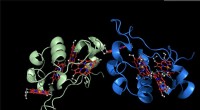
* Combinations of atoms: Molecules are formed when two or more atoms bond together chemically. These bonds can be either covalent (sharing electrons) or ionic (transferring electrons).
* New properties: The properties of a molecule are often very different from the properties of the individual atoms that make it up. For example, water (H2O) is a liquid at room temperature, while hydrogen and oxygen are both gases.
* Variety: Molecules can be simple (like diatomic oxygen, O2) or extremely complex (like DNA).
* Examples: Water (H2O), Carbon dioxide (CO2), Glucose (C6H12O6), Methane (CH4)
Key Differences:
* Size: Atoms are much smaller than molecules.
* Stability: Atoms are generally more stable when bonded together in molecules.
* Properties: Molecules often have unique properties that differ from the properties of the individual atoms that make them up.
Think of it this way:
* Atoms are like Lego bricks. They are the individual pieces that can be used to build something larger.
* Molecules are like Lego structures. They are made by combining Lego bricks (atoms) in specific ways.
Let me know if you have any other questions about atoms and molecules!