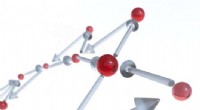
* Molecular Structure: Both oxygen (O2) and nitrogen (N2) are diatomic molecules, meaning they consist of two atoms bonded together. These bonds are strong, but the forces between individual molecules are much weaker.
* Intermolecular Forces: The primary intermolecular forces present in oxygen and nitrogen are London dispersion forces. These are temporary, weak attractions caused by temporary fluctuations in electron distribution around the molecules.
* Low Boiling Points: Due to the weak intermolecular forces, oxygen and nitrogen have very low boiling points (-183°C and -196°C respectively). This means that at room temperature, the thermal energy of the molecules is enough to overcome the weak attractions, allowing them to exist as a gas.
In contrast:
* Water (H2O) has stronger intermolecular forces (hydrogen bonding) due to the polar nature of the molecule, giving it a much higher boiling point (100°C).
In summary: Oxygen and nitrogen are gases at room temperature because their molecules are held together by weak intermolecular forces, resulting in low boiling points.