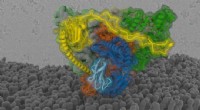
* Macromolecules: Large molecules, typically composed of thousands or even millions of atoms. They are often formed by the polymerization of smaller subunits called monomers. Examples include:
* Carbohydrates: Polysaccharides like starch and cellulose.
* Proteins: Long chains of amino acids.
* Nucleic acids: DNA and RNA, composed of nucleotides.
* Lipids: Fats, oils, and steroids, though they are not polymers in the same way as the other macromolecules.
* Micromolecules: Small molecules, typically with a lower molecular weight and simpler structure. Examples include:
* Water (H₂O)
* Carbon dioxide (CO₂)
* Glucose (C₆H₁₂O₆)
* Amino acids (the building blocks of proteins)
* Nucleotides (the building blocks of DNA and RNA)
Key Differences:
| Feature | Macromolecules | Micromolecules |
|----------------|--------------------------------------------------|----------------------------------------------|
| Size | Large, typically thousands or millions of atoms | Small, typically fewer atoms |
| Structure | Often complex, with multiple subunits | Simpler structures |
| Function | Diverse functions, including structural support, | Varying functions, including energy storage, |
| | catalysis, information storage, and signaling. | building blocks for larger molecules. |
| Examples | DNA, proteins, carbohydrates, lipids | Water, glucose, amino acids, nucleotides |
Important Note: The terms "macro" and "micro" are relative. Some molecules considered "macromolecules" are smaller than some "micromolecules." The distinction is more about the scale of the molecule and its complexity than a strict size cutoff.