* Covalent bonds involve the sharing of electrons between atoms. This creates a stable molecule where the atoms are tightly bound together.
* Ionic bonds involve the transfer of electrons from one atom to another, creating positively and negatively charged ions that attract each other.
A compound held together by covalent bonds cannot be formed from ions.
Let's look at what happens when a covalent compound dissolves in water:
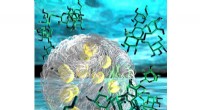
* Polar covalent compounds like sugar (sucrose) can dissolve in water. This is because water molecules are also polar, with a slightly positive end (hydrogen) and a slightly negative end (oxygen). These opposite charges attract, breaking the bonds between the sugar molecules and allowing them to be surrounded by water molecules.
* Non-polar covalent compounds like oil do not dissolve in water. This is because they have no positive or negative ends to interact with the polar water molecules.
In summary:
* Covalent compounds are formed by sharing electrons, not by the transfer of electrons that creates ions.
* Covalent compounds can dissolve in water, but this is due to interactions with the polar water molecules, not a change in their bonding.
Let me know if you have any other questions!