Here's why:
* Homogeneous mixture: A homogeneous mixture has a uniform composition throughout. Imagine a glass of saltwater: the salt is evenly dissolved, and every drop of the solution tastes the same.
* Alloy: An alloy is a mixture of metals where the atoms of the different metals are bonded together in a specific ratio. The metals in an alloy are not simply mixed together like sand and sugar. They are chemically combined at the atomic level.
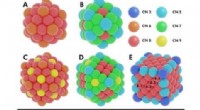
In the case of bronze, it is typically an alloy of copper and tin. The copper and tin atoms are arranged in a specific crystal structure, and the properties of the bronze are different from the properties of copper or tin alone.
Here are some key characteristics that make bronze an alloy and not a mixture:
* Different properties: Bronze is harder and stronger than either copper or tin. This is because the tin atoms disrupt the copper crystal structure, making it more resistant to deformation.
* Chemical bonding: The copper and tin atoms in bronze are bonded together through metallic bonding, which is a strong attraction between the atoms.
* Fixed composition: While the ratio of copper to tin can vary in different types of bronze, each type has a specific, fixed composition.
Therefore, bronze is not a homogeneous mixture but an alloy, which is a solid solution of metals with unique properties and a fixed composition.