* Dissolving, not reacting: When you add salt to water, the salt crystals dissolve. This means the ionic bonds holding the sodium (Na+) and chloride (Cl-) ions together in the crystal structure are broken by the water molecules. The water molecules surround the ions, effectively separating them and allowing them to move freely in the solution.
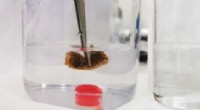
* No gas formation: This process of dissolving doesn't involve any chemical transformation of the salt or water. There's no formation of new compounds or release of gases like carbon dioxide, which is what causes the fizz in reactions like an Alka-Seltzer tablet dissolving in water.
In contrast, fizzing occurs when:
* A gas is released: This happens in reactions like those involving carbonates (like baking soda) or acids, where the reaction produces carbon dioxide gas.
* A rapid change in volume: The gas bubbles create a visual effect of "fizzing" as they escape the solution.
Therefore, the absence of gas production during the dissolving of sodium chloride in water is why we don't observe any fizz.