Here's the balanced chemical equation:
AgNO₃(aq) + KI(aq) → AgI(s) + KNO₃(aq)
Explanation:
* AgNO₃ and KI are both soluble ionic compounds, meaning they dissociate into their respective ions in solution.
* When these solutions are mixed, the silver ions (Ag⁺) from silver nitrate react with the iodide ions (I⁻) from potassium iodide.
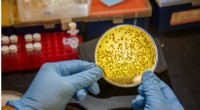
* This reaction forms AgI, which is insoluble in water and precipitates out as a bright yellow solid.
* The remaining ions, potassium (K⁺) and nitrate (NO₃⁻), remain in solution as KNO₃, which is soluble.
Key observations:
* The formation of a bright yellow precipitate is a clear indication of this reaction.
* The reaction is exothermic, meaning it releases heat.
This reaction is often used as a demonstration of precipitation reactions in chemistry. It is also used in the production of silver iodide, which is used in photography and as a seeding agent for clouds.