Here's the balanced chemical equation:
PbO (s) + 2 HNO₃ (aq) → Pb(NO₃)₂ (aq) + H₂O (l)
Let's break down what happens:
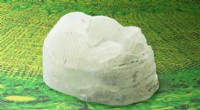
* Lead oxide (PbO): This is a solid, usually in the form of yellow lead monoxide (litharge) or red lead oxide (minium).
* Nitric acid (HNO₃): This is a strong acid, meaning it readily ionizes in solution.
* Lead nitrate (Pb(NO₃)₂): This is a soluble salt, meaning it dissolves in water.
* Water (H₂O): This is formed as a byproduct of the reaction.
Observations:
* Reaction: The reaction is generally exothermic, meaning it releases heat.
* Color change: The lead oxide will dissolve in the nitric acid, and the solution will become clear and colorless.
* Gas evolution: Depending on the concentration of the nitric acid and the temperature, you might observe some gas evolution. This is likely due to the formation of nitrogen dioxide (NO₂) if the reaction is not carefully controlled.
Important Note:
* This reaction should be performed with appropriate safety precautions as nitric acid is a corrosive substance.
* Always wear protective gear such as gloves, goggles, and a lab coat.
* Work in a well-ventilated area.
If you're interested in the specific properties of lead nitrate, you can find information about its solubility, toxicity, and uses online.