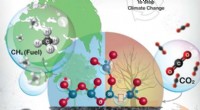
* Carbon dioxide gas: This is what causes the fizzing and bubbling.
* Sodium acetate: A salt.
* Water: This is a byproduct of the reaction.
Here's the chemical equation:
CH₃COOH (acetic acid) + NaHCO₃ (sodium bicarbonate) → CH₃COONa (sodium acetate) + H₂O (water) + CO₂ (carbon dioxide)
What happens:
1. Acid-base reaction: Acetic acid (a weak acid) reacts with sodium bicarbonate (a base).
2. Carbon dioxide formation: The bicarbonate ion (HCO₃⁻) in baking soda reacts with the hydrogen ions (H⁺) from the acetic acid. This releases carbon dioxide gas (CO₂).
3. Fizzing and bubbling: The CO₂ gas is less soluble in water than the other reactants, so it escapes as bubbles, causing the fizzing and bubbling.
Practical applications:
* Baking: This reaction is used in baking to make cakes rise. The carbon dioxide gas released helps to create air pockets in the batter.
* Cleaning: The fizzing action can help to loosen dirt and grime. It's also a great way to unclog drains.
* Science experiments: The reaction is a fun and easy way to demonstrate the principles of acid-base chemistry.
Safety:
* While this reaction is generally safe, it's important to avoid getting the mixture in your eyes. If you do, flush them with plenty of water.
* Be careful not to create too much pressure in a closed container. The CO₂ gas buildup could cause an explosion.