Understanding Polarity
* Water (H₂O) is a polar molecule: This means it has a slightly positive end (the hydrogen atoms) and a slightly negative end (the oxygen atom). This uneven distribution of charge creates a "dipole".
* Oil is a nonpolar molecule: Its molecules have an even distribution of charge, with no distinct positive or negative ends.
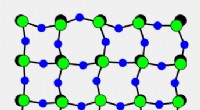
* Salt (NaCl) is an ionic compound: It consists of positively charged sodium ions (Na+) and negatively charged chloride ions (Cl-) held together by electrostatic attraction.
Dissolving Salt
* Water's polarity is key: Water molecules surround the salt ions, with the negative oxygen end of the water molecules attracted to the positive sodium ions, and the positive hydrogen end of the water molecules attracted to the negative chloride ions.
* Breaking the bonds: This attraction overcomes the ionic bond holding the salt together, causing the salt to dissolve. The salt ions become surrounded by water molecules and disperse throughout the solution.
Why Salt Doesn't Dissolve in Oil
* Lack of attraction: Oil, being nonpolar, doesn't have the same charge separation as water. It cannot effectively surround and attract the charged ions of salt.
* No bond breaking: Since there's no strong attraction between the oil molecules and the salt ions, the ionic bonds holding the salt together remain intact.
In simple terms: Imagine salt ions as magnets. Water is like a bunch of tiny magnets with opposite poles, pulling the salt ions apart. Oil is like a bunch of non-magnetic marbles; there's no attraction to pull the salt ions apart.