Here's a breakdown:
* Boiling: When water reaches its boiling point (100°C or 212°F), the molecules have enough energy to overcome the forces holding them together in the liquid state. They transition rapidly into a gaseous state, forming bubbles within the liquid.
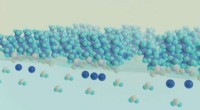
* Evaporation: This is a broader term that refers to the process of a liquid transforming into a gas at any temperature. Evaporation can happen even below the boiling point, as some molecules on the surface of the liquid have enough energy to break free and become vapor.
So, while both boiling and evaporation involve water molecules transforming into vapor, boiling specifically describes the rapid change happening at the boiling point, while evaporation encompasses the slower process happening at any temperature.