1. Molecular Structure and Intermolecular Forces:
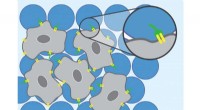
* Polarity: Substances with similar polarities tend to dissolve in each other. "Like dissolves like." For example, water is a polar solvent, and it dissolves other polar substances like sugar. Nonpolar substances like oil don't dissolve in water because their molecular structures don't interact favorably.
* Intermolecular Forces: The strength of the attractions between molecules influences solubility. Strong intermolecular forces, like hydrogen bonding in water, can be difficult to overcome. Substances with weaker intermolecular forces are more likely to dissolve.
2. Chemical Reactivity:
* Reactions: Some substances react with the solvent instead of simply dissolving. This can lead to the formation of new substances that are not soluble. For example, iron reacts with acids to form hydrogen gas and soluble iron salts.
3. Physical Properties:
* Lattice Structure: Crystalline solids have a rigid, organized structure. Breaking apart these structures requires a significant amount of energy, which is why many solids don't dissolve easily.
* Size and Shape: Large molecules or particles may be too bulky to fit between solvent molecules, preventing dissolution. This is why sand doesn't dissolve in water.
4. Temperature and Pressure:
* Temperature: Increasing temperature generally increases solubility, as it provides more energy to overcome intermolecular forces. However, there are exceptions.
* Pressure: Pressure primarily affects the solubility of gases. Increasing pressure increases the solubility of gases.
5. Saturation:
* Limited Solubility: Even if a substance can dissolve, there is a limit to how much can dissolve in a given amount of solvent at a specific temperature. Once the solution reaches saturation, no more solute will dissolve.
In summary, solubility is a complex phenomenon influenced by multiple factors. It's not just about whether a substance can break down into smaller particles but also how those particles interact with the solvent and the surrounding environment.