Here's how it works:
* Electricity is passed through a solution or molten compound. This provides the energy needed to break the chemical bonds holding the compound together.
* Ions are formed. The electrical current causes the compound to break down into positively charged ions (cations) and negatively charged ions (anions).
* Ions migrate to electrodes. The cations move towards the negatively charged electrode (cathode), and the anions move towards the positively charged electrode (anode).
* Chemical reactions occur at the electrodes. The ions react with the electrodes, either gaining or losing electrons, resulting in the formation of new substances.
Examples of electrolysis:
* Electrolysis of water: Water (H₂O) is split into hydrogen gas (H₂) and oxygen gas (O₂).
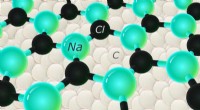
* Electrolysis of molten sodium chloride: Molten sodium chloride (NaCl) is split into sodium metal (Na) and chlorine gas (Cl₂).
Key takeaway: Electrolysis is a powerful technique used to break down compounds into their constituent elements or simpler compounds. It plays a crucial role in various industries, including chemical production, metal refining, and the production of chlorine and sodium hydroxide.


![New Cascade Reaction Enables Synthesis of Diazabicyclo[3.2.1]Octanes](https://www.scienceaq.com/article/uploadfiles/202110/2021102310463178_S.jpg)