Here's how it relates to balancing chemical equations:
* Atoms are rearranged, not created or destroyed: Chemical reactions involve the rearrangement of atoms to form new molecules. The atoms themselves remain unchanged.
* Balancing ensures equal atoms on both sides: By balancing a chemical equation, you ensure that the same number of atoms of each element appears on both the reactant (starting materials) and product (resulting substances) sides of the equation.
* Reflecting the law: This balance reflects the conservation of mass principle. Since you can't create or destroy atoms, the total mass of the reactants must equal the total mass of the products.
Example:
The unbalanced equation for the combustion of methane is:
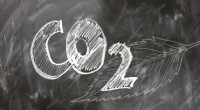
CH₄ + O₂ → CO₂ + H₂O
This equation is unbalanced because:
* There are 4 hydrogen atoms on the left but only 2 on the right.
* There are 2 oxygen atoms on the left but 3 on the right.
To balance it, we add coefficients:
CH₄ + 2O₂ → CO₂ + 2H₂O
Now, we have:
* 1 carbon atom on both sides
* 4 hydrogen atoms on both sides
* 4 oxygen atoms on both sides
This balanced equation reflects the Law of Conservation of Mass, ensuring that the total mass of the reactants (methane and oxygen) equals the total mass of the products (carbon dioxide and water).