1. Decomposition Reactions:
* Definition: A single compound breaks down into two or more simpler substances.
* Example: CaCO₃ (calcium carbonate) → CaO (calcium oxide) + CO₂ (carbon dioxide)
* Why Free Elements Are Unlikely: Decomposition reactions involve breaking down a compound, not forming it from simpler elements.
2. Double Displacement Reactions (Metathesis):
* Definition: Two reactants exchange ions, leading to the formation of two new compounds.
* Example: AgNO₃ (silver nitrate) + NaCl (sodium chloride) → AgCl (silver chloride) + NaNO₃ (sodium nitrate)
* Why Free Elements Are Unlikely: These reactions involve the swapping of ions within existing compounds.
3. Combustion Reactions (Specific Type):
* Definition: A rapid reaction involving a substance with an oxidant (usually oxygen), producing heat and light.
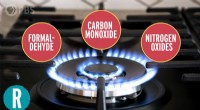
* Example: CH₄ (methane) + 2O₂ (oxygen) → CO₂ (carbon dioxide) + 2H₂O (water)
* Why Free Elements Are Unlikely: While some combustion reactions involve free elements (like the example above), many involve compounds like carbohydrates, fuels, or other organic molecules.
Important Notes:
* Exceptions: There are some reactions where a free element might be a product of a decomposition reaction. For example, the decomposition of hydrogen peroxide (H₂O₂) into water (H₂O) and oxygen (O₂).
* Context Matters: Whether a free element is involved depends heavily on the specific reaction conditions. For example, a reaction might involve a free element as a catalyst or a reactant in a very specific environment.
Key Takeaway:
While many reactions can involve free elements as reactants (like combination reactions), decomposition, double displacement, and certain types of combustion reactions usually don't.