* Electronegativity Difference: Tin (Sn) has an electronegativity of 1.96, while oxygen (O) has an electronegativity of 3.44. The difference in electronegativity is large (1.48), indicating that oxygen strongly attracts the shared electrons in the bond. This results in oxygen gaining a partial negative charge and tin gaining a partial positive charge.
* Metal and Nonmetal: Tin is a metal, and oxygen is a nonmetal. Metal-nonmetal bonds are typically ionic.
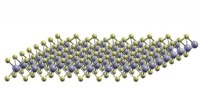
* Crystal Structure: SnO₂ has a crystal structure similar to rutile (TiO₂), where the tin ions are surrounded by oxygen ions in a tetrahedral arrangement. This structure is consistent with ionic bonding.
In summary: The large electronegativity difference, the presence of a metal and a nonmetal, and the crystal structure all point to SnO₂ being an ionic compound.