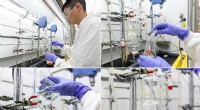
Reaction:
Cyclohexanol (C6H12O) + H2SO4 (concentrated) → Cyclohexene (C6H10) + H2O
Mechanism:
1. Protonation of the alcohol: The concentrated sulfuric acid protonates the hydroxyl group (-OH) of cyclohexanol, forming a good leaving group (water).
2. Formation of carbocation: The protonated cyclohexanol loses water, leaving behind a carbocation.
3. Elimination of a proton: A proton is removed from a carbon adjacent to the carbocation by another molecule of sulfuric acid. This forms a double bond, resulting in the formation of cyclohexene.
Conditions:
* Concentrated sulfuric acid: This acts as a catalyst and a dehydrating agent.
* Heat: The reaction is typically carried out at elevated temperatures to facilitate the elimination of water.
Important Notes:
* This reaction can also lead to other products, like di- and tri-substituted cyclohexenes, depending on the reaction conditions.
* The mechanism involves several steps, including carbocation rearrangements, which can lead to a complex mixture of products.
Overall, the reaction of cyclohexanol with sulfuric acid is a classic example of an acid-catalyzed dehydration reaction, leading to the formation of cyclohexene.