* Ionic Bonding: Ionic compounds are formed by the electrostatic attraction between positively charged ions (cations) and negatively charged ions (anions). They don't form discrete molecules like covalent compounds do.
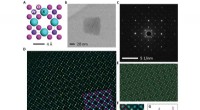
* Lattice Structure: Instead of molecules, ionic compounds exist as extended three-dimensional lattices. In this structure, ions are arranged in a regular, repeating pattern.
* Empirical Formula: Ionic compounds are represented by their empirical formula, which shows the simplest whole-number ratio of the ions present. This formula reflects the ratio of ions in the lattice, not the composition of individual molecules.
Example:
* Sodium chloride (NaCl): The empirical formula represents one sodium ion (Na+) for every chloride ion (Cl-) in the crystal lattice. There's no distinct "NaCl molecule."
In summary: Ionic compounds lack molecular formulas because they don't exist as discrete molecules but as extended lattices of ions. Their composition is represented by empirical formulas, which indicate the simplest whole-number ratio of ions in the lattice.