Physical Properties:
* Appearance: Hard, brittle, grayish-white solid.
* Density: 5.323 g/cm³
* Melting point: 937.4 °C (1719 °F)
* Boiling point: 2830 °C (5126 °F)
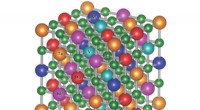
* Crystal structure: Diamond cubic
* Conductivity: Semiconducting (poor conductor of electricity at room temperature, but conductivity increases with temperature)
* Hardness: 6 on the Mohs scale
* Ductility: Brittle, not ductile
Chemical Properties:
* Reactivity: Relatively unreactive at room temperature, but becomes more reactive at higher temperatures.
* Oxidation states: +2, +4
* Formation of compounds: Forms compounds with oxygen, halogens, and other elements.
* Stable isotopes: 70, 72, 73, 74, 76.
* Radioactive isotopes: 68, 69, 71, 75, 77, 78, 81, 82.
Other Notable Characteristics:
* Semiconductor: This is perhaps the most significant characteristic of germanium, making it a vital component in electronics.
* Transparency to infrared radiation: Used in infrared optics and detectors.
* Photoconductivity: Its conductivity increases when exposed to light, which is used in solar cells and light detectors.
Uses:
* Transistors and diodes: Key element in early transistors and diodes.
* Semiconductors: Used in various semiconductor devices, including integrated circuits.
* Infrared optics: Employed in lenses, prisms, and windows for infrared applications.
* Solar cells: Used in some solar cells, particularly those designed for specific spectral ranges.
* Fiber optic cables: Used in fiber optic cable manufacturing.
* Alloying: Added to other metals to enhance their properties.
Environmental Concerns:
* Toxicity: Germanium compounds can be toxic, but elemental germanium is generally considered safe.
* Limited environmental impact: Germanium is not commonly found in the environment, so its environmental impact is limited.
Overall, Germanium is a fascinating element with unique properties that make it valuable in various technological applications.