Here's a breakdown of how it works:
1. Dissolution: Minerals are dissolved in water, forming a solution.
2. Saturation: As the solution becomes more concentrated, it reaches a point of saturation, where it can no longer hold all the dissolved minerals.
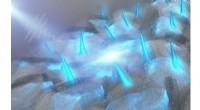
3. Precipitation: When the solution becomes supersaturated, the excess dissolved minerals start to precipitate out of the solution, forming crystals.
4. Crystal Growth: These crystals continue to grow as more minerals precipitate out of the solution, eventually forming a solid mass.
Examples of chemical rocks formed by this process include:
* Rock Salt (Halite): Formed by the evaporation of seawater or brine pools, leaving behind salt crystals.
* Gypsum: Also forms by the evaporation of water, but with higher concentrations of calcium sulfate.
* Travertine: Formed by the precipitation of calcium carbonate from groundwater, often around hot springs or caves.
* Stalactites and Stalagmites: These cave formations are created by the slow precipitation of calcium carbonate from dripping water.
* Oolitic Limestone: Formed by the accumulation and cementation of ooids, small spherical grains of calcium carbonate that form in warm, shallow waters.
Factors influencing chemical rock formation:
* Water Temperature: Warmer water can hold more dissolved minerals.
* Water Chemistry: The types of minerals present and their concentrations influence the type of chemical rock that forms.
* Evaporation Rate: Faster evaporation leads to quicker saturation and precipitation.
In summary: Chemical rocks form when minerals dissolved in water precipitate out of solution as crystals. This process is driven by factors like temperature, evaporation, and water chemistry.