1. Nucleation:
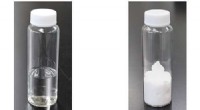
* Tiny, stable solid particles called nuclei form within the solution, melt, or vapor.
* These nuclei act as seeds for further crystal growth.
* Nucleation can occur spontaneously or be induced by adding seed crystals or altering the environment (e.g., cooling, changing pressure).
2. Crystal Growth:
* Once nuclei are formed, molecules from the surrounding solution, melt, or vapor start to attach to the nuclei's surface.
* These molecules arrange themselves in a specific, repeating pattern, forming the crystal lattice.
* As more molecules attach, the crystal grows in size and shape.
3. Crystal Perfection and Morphology:
* The crystal's final shape and perfection depend on factors like temperature, impurities, and the rate of growth.
* Some crystals can be highly symmetrical and perfect, while others might be more irregular.
Factors Affecting Crystallization:
* Temperature: Lower temperatures generally favor crystallization as molecules have less energy to stay dissolved.
* Solvent: The choice of solvent can significantly influence the solubility of the solute and the crystal's growth rate.
* Concentration: Higher concentrations generally favor crystallization as there are more molecules available to form nuclei and grow crystals.
* Impurities: Impurities can inhibit or alter crystal growth, leading to imperfections or different crystal morphologies.
* Stirring: Gentle stirring can promote nucleation and more uniform crystal growth.
Types of Crystallization:
* Solution Crystallization: Most common method, where a solute is dissolved in a solvent and then cooled or evaporated to induce crystallization.
* Melt Crystallization: Used for materials that melt rather than dissolve, like metals or polymers. The melt is cooled to induce crystallization.
* Vapor Crystallization: Crystallization from a vapor phase, often used for growing crystals of volatile compounds.
Applications of Crystallization:
* Chemistry and Materials Science: Purifying compounds, separating mixtures, growing high-quality crystals for various applications.
* Pharmaceuticals: Producing pure drug crystals with controlled size and shape for efficient delivery and effectiveness.
* Food Industry: Making sugar crystals, salt crystals, and other food products.
Crystallization is a complex process influenced by several factors, leading to a wide range of applications in various industries.