Here's why:
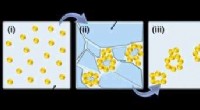
* Homogeneous means "uniform" or "the same throughout".
* In a homogeneous mixture, the components are so well dispersed that you can't see individual particles, even with a microscope.
Examples of homogeneous mixtures include:
* Saltwater: Salt dissolves evenly in water, creating a single, clear solution.
* Air: A mixture of gases (nitrogen, oxygen, carbon dioxide, etc.) that is uniform throughout.
* Sugar dissolved in coffee: The sugar completely dissolves, creating a single, evenly colored liquid.
Contrast this with a heterogeneous mixture:
* Heterogeneous means "different throughout".
* In a heterogeneous mixture, the components are not evenly dispersed. You can see separate particles or layers.
Examples of heterogeneous mixtures include:
* Sand and water: The sand settles to the bottom, creating distinct layers.
* Oil and water: They separate into distinct layers because they don't mix.
* Chocolate chip cookies: The chocolate chips are unevenly distributed throughout the dough.