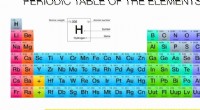
* Electron Configuration: Main group metals have their valence electrons in the s and p orbitals. The d subshell is filled before the s and p orbitals in the period 4 transition metals, but it is not part of the valence electron configuration for main group metals.
* Ionization Energy: The ionization energy (the energy required to remove an electron) is generally lower for s-electrons than for d-electrons. This is because s-electrons are further from the nucleus and experience less effective nuclear charge (the attraction between the nucleus and electrons).
* Stability: Losing electrons from the s subshell leads to a more stable electron configuration for main group metals, as they aim to achieve a noble gas configuration.
Example: Tin (Sn) has the electron configuration [Kr] 4d¹⁰ 5s² 5p². When it forms a cation, it loses the two 5p electrons first, followed by the two 5s electrons.
Important Note: While main group metals don't lose d-electrons first, they can have d-orbitals involved in bonding. For example, Sn can form Sn²⁺ or Sn⁴⁺ ions, but it can also participate in covalent bonding using its d-orbitals.
In summary, the tendency of main group metals is to lose electrons from their s and p subshells first, not the d subshell.