1. Water:
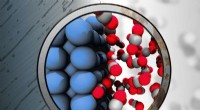
* Salt dissolves in water, forming ions (Na+ and Cl-). This process is called dissociation.
2. Acids:
* Salt reacts with strong acids like HCl or H2SO4 to form new salts and release hydrogen chloride (HCl) gas. For example:
* NaCl + HCl → NaCl + H2O
* NaCl + H2SO4 → Na2SO4 + 2HCl
3. Bases:
* Salt reacts with strong bases like NaOH or KOH to form new salts and water. For example:
* NaCl + NaOH → NaOH + NaCl
* NaCl + KOH → KCl + NaOH
4. Metals:
* Salt can react with certain active metals like lithium (Li) or potassium (K) to form new salts and release hydrogen gas. For example:
* 2NaCl + 2Li → 2LiCl + H2
5. Other salts:
* Salt can react with other salts to form new salts through double displacement reactions. For example:
* NaCl + AgNO3 → AgCl + NaNO3
6. Heat:
* When heated to high temperatures, salt can decompose into its constituent elements, sodium (Na) and chlorine (Cl2). This is a very difficult process, requiring extreme temperatures.
Important Note:
* The reactions of salt are often influenced by factors like concentration, temperature, and the presence of other substances.
* Not all reactions occur readily or completely. Some reactions may require specific conditions or catalysts.