Here's a breakdown:
* Ionic compound: A compound formed by the electrostatic attraction between positively charged ions (cations) and negatively charged ions (anions).
* Hydrated: Means that water molecules are incorporated into the compound's structure.
* Crystal structure: The organized, repeating arrangement of ions in a solid.
How it works:
1. Water molecules interact with the ions in the ionic compound through dipole-ion interactions. This is due to the polar nature of water molecules, which have a positive end (hydrogen) and a negative end (oxygen).
2. The positive end of a water molecule attracts the negatively charged anion, while the negative end of a water molecule attracts the positively charged cation.
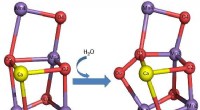
3. These interactions are strong enough to hold the water molecules in place within the crystal lattice of the ionic compound.
Examples of hydrated ionic solids:
* Copper(II) sulfate pentahydrate (CuSO₄·5H₂O): This blue solid has five water molecules associated with each copper(II) sulfate unit.
* Sodium carbonate decahydrate (Na₂CO₃·10H₂O): This white solid contains ten water molecules per formula unit.
* Calcium chloride dihydrate (CaCl₂·2H₂O): This white solid has two water molecules for every calcium chloride unit.
Characteristics of hydrated ionic solids:
* They often have a different color compared to their anhydrous (water-free) forms. For example, copper(II) sulfate pentahydrate is blue, while anhydrous copper(II) sulfate is white.
* They may lose their water of hydration upon heating, resulting in a change in color and physical properties. This process is called dehydration.
* They can be used for various applications, such as in pharmaceuticals, agriculture, and industrial processes.
In summary, a hydrated ionic solid is an ionic compound where water molecules are integrated into the crystal structure. The presence of these water molecules affects the compound's properties, including color and stability.