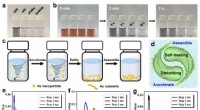
Here's why:
* Hypertonic: A hypertonic solution has a higher concentration of solutes (dissolved substances) than the cell. This causes water to move out of the cell, leading to the cell shrinking (crenation).
* Hypotonic: A hypotonic solution has a lower concentration of solutes than the cell. This causes water to move into the cell, leading to the cell swelling and potentially bursting (lysis).
* Isotonic: An isotonic solution has the same concentration of solutes as the cell. There is no net movement of water, and the cell maintains its normal shape.
Therefore, if the solution concentration of dissolved substances is greater in the cell than the solution it is placed in, it means the solution is hypotonic.