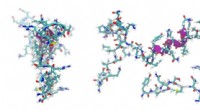
1. Nitrogenous Bases: These are the building blocks of genetic information. There are five main nitrogenous bases:
* Adenine (A) and Guanine (G) are purines, with two rings in their structure.
* Cytosine (C), Thymine (T), and Uracil (U) are pyrimidines, with one ring in their structure.
* Thymine (T) is found in DNA, while Uracil (U) is found in RNA.
2. Pentose Sugar: This is a five-carbon sugar molecule.
* Deoxyribose is found in DNA.
* Ribose is found in RNA.
3. Phosphate Group: This is a negatively charged molecule that links the sugar molecules together to form a chain.
These three components are linked together to form nucleotides. A nucleotide consists of a nitrogenous base attached to a pentose sugar, which is then attached to a phosphate group.
Nucleic acids are polymers of nucleotides. They are long chains of nucleotides linked together by phosphodiester bonds between the phosphate group of one nucleotide and the sugar of the next. The sequence of nitrogenous bases in a nucleic acid molecule determines the genetic information it carries.
Here's a simple analogy: Imagine a necklace made of beads. The beads are like nucleotides, with the nitrogenous base being the "color" of the bead, the sugar being the "material" the bead is made of, and the phosphate group being the "thread" that connects the beads. The specific order of colors in the necklace represents the genetic information, just like the sequence of nitrogenous bases in a nucleic acid.