Here's a breakdown:
* Starts with: Acetyl-CoA (2-carbon compound) combines with oxaloacetate (4-carbon compound) to form citrate (6-carbon compound).
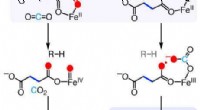
* Cycle continues: Citrate undergoes a series of enzymatic reactions, losing two carbons as CO2 in the process.
* Ends with: Regeneration of oxaloacetate, ready to accept another Acetyl-CoA molecule, and the cycle continues.
Key points about the Krebs cycle:
* It's a central pathway in cellular respiration, occurring within the mitochondria.
* It produces ATP (energy) directly, but its primary role is to generate electron carriers (NADH and FADH2) that are used in the electron transport chain to produce much more ATP.
* It also produces intermediates used in other metabolic pathways.
Let me know if you would like more details about the specific steps of the Krebs cycle!