* Hydrophobic Nature: The lipid bilayer is composed of phospholipids with hydrophobic tails that face inward, creating a barrier that repels water and water-soluble molecules.
* Polarity: Water-soluble substances are typically polar, meaning they have a positive and negative end. This polarity makes it difficult for them to pass through the nonpolar, hydrophobic core of the membrane.
* Size and Charge: Even if a water-soluble molecule is small, its charge can prevent it from crossing the membrane.
Examples of substances that are NOT permeable to the lipid bilayer:
* Ions (e.g., Na+, K+, Cl-)
* Sugars (e.g., glucose, fructose)
* Amino acids
* Large proteins
Exceptions:
* Small, uncharged molecules: Some very small, uncharged molecules, like water, can pass through the membrane to a limited extent. However, this movement is still relatively slow.
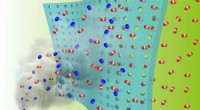
* Transport proteins: Cells have specific transport proteins embedded in their membranes that help move water-soluble substances across. These proteins can act as channels or carriers.
In summary: The lipid bilayer is a selectively permeable barrier that primarily allows small, nonpolar molecules to pass through while restricting the movement of most water-soluble substances.