These forces are a type of weak, non-covalent interaction that arises from temporary fluctuations in electron distribution around molecules. There are three main types of van der Waals forces:
* London dispersion forces: These occur between all molecules, even nonpolar ones, due to temporary fluctuations in electron clouds.
* Dipole-dipole interactions: These occur between polar molecules due to the permanent partial charges on their atoms.
* Dipole-induced dipole interactions: These occur when a polar molecule induces a temporary dipole in a nonpolar molecule.
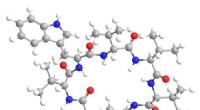
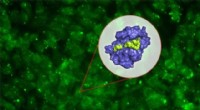
While individually weak, van der Waals forces can be significant in large numbers, especially for larger molecules with many atoms. They play a crucial role in many biological processes, such as protein folding and the formation of cell membranes.