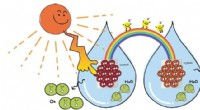
1. Sunlight: This is the primary energy source for the light reactions. It provides the photons that excite electrons in chlorophyll, initiating the process.
2. Water (H2O): Water serves as the source of electrons for the electron transport chain and also provides the oxygen that is released as a byproduct.
3. Chlorophyll: This pigment, located in the thylakoid membranes of chloroplasts, absorbs light energy. There are two main types of chlorophyll, chlorophyll a and chlorophyll b, each with different absorption spectra.
4. Thylakoid membranes: These are the internal membranes within chloroplasts that contain chlorophyll and other components of the electron transport chain.
5. Electron transport chain: This series of protein complexes embedded in the thylakoid membranes carries electrons from water to NADP+ (nicotinamide adenine dinucleotide phosphate).
6. ATP Synthase: This enzyme uses the proton gradient generated by the electron transport chain to synthesize ATP (adenosine triphosphate), the energy currency of the cell.
7. NADP+: This electron carrier is reduced to NADPH by accepting electrons from the electron transport chain. NADPH is then used in the Calvin cycle to reduce carbon dioxide.
In summary:
* Sunlight excites electrons in chlorophyll.
* Excited electrons move through the electron transport chain, generating ATP and NADPH.
* Water is split, providing electrons and releasing oxygen.
These light reactions provide the energy (ATP) and reducing power (NADPH) necessary for the Calvin cycle, where carbon dioxide is fixed into sugars.