1. Enzyme and Substrate Meet:
* Substrate: The molecule that the enzyme acts upon.
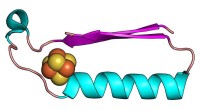
* Active Site: A specific region on the enzyme that binds to the substrate. This site is shaped like a lock, and the substrate is like the key.
* Specificity: Enzymes are highly specific. Each enzyme typically works on just one or a very limited number of substrates.
2. Formation of the Enzyme-Substrate Complex:
* Binding: The substrate binds to the active site of the enzyme, forming a temporary complex.
* Induced Fit Model: The enzyme's active site can slightly change shape to fit the substrate more precisely. It's like a handshake – both parties adjust slightly to make a secure connection.
3. Catalysis (Lowering Activation Energy):
* Activation Energy: The minimum energy required for a reaction to occur.
* Enzyme's Role: Enzymes speed up reactions by lowering the activation energy. They do this by:
* Bringing reactants closer together: This increases the likelihood of collisions.
* Providing an alternative reaction pathway: This pathway requires less energy.
* Stabilizing the transition state: This is the unstable intermediate state that molecules must pass through to react.
4. Product Formation and Release:
* Reaction: The enzyme facilitates the chemical transformation of the substrate(s) into product(s).
* Product Release: Once the reaction is complete, the product(s) are released from the active site.
* Enzyme Regeneration: The enzyme is now free to bind to another substrate and repeat the cycle.
Key Points:
* Enzymes are not consumed in reactions: They act as catalysts, meaning they speed up reactions without being used up themselves.
* Enzymes are highly specific: Each enzyme typically catalyzes only one or a very small number of reactions.
* Enzymes are essential for life: They play crucial roles in all biological processes, including digestion, respiration, and DNA replication.
Example:
Imagine a simple reaction where two molecules, A and B, need to combine to form a product, C. The enzyme, E, speeds up this process:
1. A + B + E → E-A-B (enzyme-substrate complex)
2. E-A-B → E + C (product formation and release)
Let me know if you'd like more details about specific enzyme mechanisms or have any other questions!