1. Light Absorption and Electron Excitation:
* Light energy is absorbed by chlorophyll pigments within the chloroplasts of plant cells.
* This energy excites electrons in the chlorophyll molecules, raising them to a higher energy level.
2. Electron Transport Chain:
* The excited electrons are passed along a series of electron carriers within the thylakoid membrane of the chloroplast.
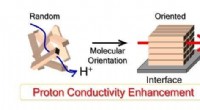
* As the electrons move down this chain, they lose energy, which is used to pump protons (H+) from the stroma (the fluid inside the chloroplast) into the thylakoid lumen.
* This creates a proton gradient across the thylakoid membrane.
3. ATP Synthase and Photophosphorylation:
* The proton gradient drives the movement of protons back across the thylakoid membrane through a protein complex called ATP synthase.
* This movement of protons provides the energy needed for ATP synthase to catalyze the phosphorylation of ADP to ATP.
* The addition of a phosphate group to ADP forms the pyrophosphate bond in ATP, storing the energy captured from light.
Summary:
Essentially, light energy is used to create a proton gradient, which is then used by ATP synthase to generate ATP. This process is crucial for plants to convert light energy into chemical energy that can be used for growth and other biological processes.
Key Points:
* Photophosphorylation is part of the light-dependent reactions of photosynthesis.
* The energy captured from light is used to create a proton gradient.
* ATP synthase utilizes the proton gradient to synthesize ATP.
* The process of photophosphorylation is analogous to oxidative phosphorylation in cellular respiration, where a proton gradient is also used to generate ATP.
Let me know if you have any other questions about this process!