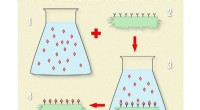
Enzymes are biological catalysts that speed up biochemical reactions without being consumed in the process. They are highly specific, meaning they typically catalyze only one or a small number of reactions.
Here's a breakdown of why enzymes are considered protein catalysts:
* Structure: Enzymes are made up of long chains of amino acids, which are the building blocks of proteins. The specific sequence and arrangement of amino acids determine the enzyme's three-dimensional structure.
* Active Site: Enzymes have a special region called the active site. This site binds to the reactants (substrates) of the reaction and facilitates their conversion into products.
* Catalysis: The active site provides a specific environment that lowers the activation energy of the reaction, making it occur faster.
Examples of enzymes:
* Lactase: Breaks down lactose in dairy products.
* Amylase: Breaks down starch into sugars.
* Pepsin: Breaks down proteins in the stomach.
In summary, enzymes are the protein catalysts that drive countless biological reactions within living organisms.