1. Substrate Binding:
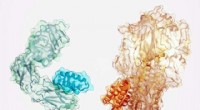
* Enzymes have specific active sites, regions with a unique shape and chemical environment.
* The substrate, the molecule the enzyme acts upon, binds to the active site, forming an enzyme-substrate complex.
* This binding is highly specific, like a lock and key, ensuring the enzyme only catalyzes the desired reaction.
2. Lowering Activation Energy:
* Once bound, the enzyme can strain the substrate molecule, weakening existing bonds.
* It can also bring reactive groups closer together, facilitating the formation of new bonds.
* By altering the chemical environment of the active site, the enzyme creates a transition state, a high-energy intermediate state necessary for the reaction to proceed.
* This transition state has lower energy than the one without the enzyme, effectively lowering the activation energy barrier.
3. Product Formation and Release:
* The reaction occurs, forming the product.
* The product has a lower affinity for the active site than the substrate and is released.
* The enzyme remains unchanged and is ready to bind another substrate molecule, catalyzing the reaction again.
In summary:
Enzymes accelerate reactions by:
* Providing an alternative reaction pathway with a lower activation energy.
* Stabilizing the transition state, making it easier to reach.
* Increasing the frequency of collisions between reactants.
Examples:
* Lactase: Breaks down lactose, a sugar found in milk, into simpler sugars.
* Amylase: Breaks down starch into simpler sugars.
* DNA polymerase: Catalyzes the synthesis of DNA molecules.
Factors affecting enzyme activity:
* Temperature: Enzymes have an optimal temperature for activity.
* pH: Each enzyme has an optimal pH range for activity.
* Substrate concentration: The rate of reaction increases with substrate concentration until saturation is reached.
* Inhibitors: Molecules that can bind to the enzyme and block its activity.
Understanding how enzymes catalyze reactions is crucial in fields like medicine, biotechnology, and food science. They play critical roles in all biological processes, from digestion to energy production.