Enzymes are biological catalysts. They are proteins (or sometimes RNA molecules) that speed up chemical reactions without being consumed in the process.
Here's a simple analogy: Imagine you're trying to build a Lego castle. You can do it slowly, one brick at a time, but it would take forever. An enzyme would be like a special tool that helps you connect the bricks much faster, allowing you to build the castle much quicker.
Enzymes achieve this incredible feat by lowering the activation energy required for a reaction to occur.
Let's break down the process:
* Activation energy: This is the minimum amount of energy required for a reaction to start. Think of it as the energy needed to push a boulder over a hill.
* Enzymes as catalysts: Enzymes provide an alternative pathway for the reaction to occur, one with a much lower activation energy. This is like building a ramp instead of pushing the boulder directly over the hill.
* Reaction speed: By lowering the activation energy, enzymes allow more molecules to reach the transition state, thus speeding up the reaction.
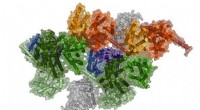
* Specificity: Each enzyme typically catalyzes only one or a few specific reactions. This is due to their unique 3D structure, which allows them to bind only to specific molecules called substrates.
* Active site: This is a special region on the enzyme where the substrate binds. The active site is shaped to fit the substrate like a lock and key.
* Regulation: Enzyme activity can be controlled by various factors, including:
* Temperature: Most enzymes have an optimal temperature range.
* pH: Enzymes also have an optimal pH range.
* Inhibitors: Some molecules can block the active site, preventing the enzyme from working.
* Activators: Some molecules can increase enzyme activity.
Enzymes are crucial for virtually every biological process in our bodies. They are involved in:
* Digestion: Breaking down food into smaller molecules that can be absorbed.
* Cellular respiration: Generating energy from food.
* DNA replication: Copying DNA for cell division.
* Protein synthesis: Building new proteins.
* Neurotransmitter production: Creating chemicals that transmit signals in the nervous system.
Without enzymes, life as we know it would be impossible. They are truly the workhorses of the biological world.