1. Temperature:
* Higher temperature means more kinetic energy. Molecules move faster and collide more frequently, increasing the chance of successful collisions that lead to reactions.
2. Concentration:
* Higher concentration means more reactant molecules packed together. This increases the chances of collisions and therefore the rate of reaction.
3. Surface Area:
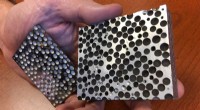
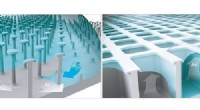
* A greater surface area allows for more contact points between reactants. Think of a solid reactant - breaking it into smaller pieces increases the surface area exposed to the other reactants, speeding up the reaction.
4. Catalysts:
* Catalysts are substances that speed up reactions without being consumed themselves. They provide an alternative reaction pathway with a lower activation energy, allowing the reaction to proceed faster.
5. Pressure (for gaseous reactions):
* Higher pressure in a gaseous reaction forces molecules closer together. This increases the chances of collisions and thus speeds up the reaction.
6. Stirring or agitation:
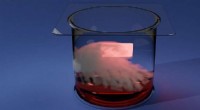
* Stirring or agitating reactants helps to mix them thoroughly and increases the chance of collisions. This is particularly important in heterogeneous reactions (reactions involving substances in different phases).
7. Light (for photochemical reactions):
* Light can provide the energy needed to break bonds and initiate some reactions. This is especially true for photochemical reactions.
It's important to note that these factors can work together to influence reaction rates. For example, increasing the temperature and concentration of reactants will have a much larger impact on reaction speed than just increasing one factor alone.