1. Chemical Reaction:
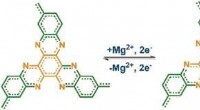
* Formation of a new molecule: This is the most common outcome. The molecules react to form a new molecule with different properties.
* Example: Hydrogen (H2) and Oxygen (O2) react to form water (H2O).
* Breaking down existing molecules: Sometimes, the combination of two molecules leads to the breaking down of one or both into smaller molecules.
* Example: A complex carbohydrate like starch can be broken down into simpler sugars by reacting with water.
2. Non-Covalent Interactions:
* Intermolecular Forces: Molecules can interact through various forces like hydrogen bonding, dipole-dipole interactions, London dispersion forces, etc. These forces can hold molecules together without forming new bonds.
* Example: Water molecules form hydrogen bonds with each other, leading to its liquid state.
* Complex Formation: Molecules can form larger assemblies or complexes. These complexes can be temporary or stable.
* Example: An enzyme molecule binds to its substrate to catalyze a reaction.
3. Physical Interactions:
* Mixing: Two molecules can simply mix together without chemically reacting.
* Example: Salt dissolves in water, forming a solution.
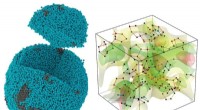
* Aggregation: Molecules can aggregate to form larger structures.
* Example: Micelles are formed when soap molecules aggregate in water.
Factors affecting the outcome:
* Type of molecules: The chemical composition and structure of the molecules will dictate how they interact.
* Conditions: Temperature, pressure, and the presence of catalysts or other molecules can influence the outcome.
Understanding the specific outcome requires knowing the specific molecules involved and the conditions they are in. The process of combining molecules is essential to many chemical and biological processes.