1. Providing an Alternate Reaction Pathway:
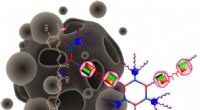
* Enzymes act as a temporary binding site for reactants (substrates).
* They bring the substrates together in a specific orientation that facilitates the reaction.
* This interaction creates a new reaction pathway with a lower activation energy.
2. Stabilizing the Transition State:
* The active site of an enzyme is specifically shaped to fit the transition state of the reaction (the unstable, high-energy intermediate state between reactants and products).
* This interaction helps to stabilize the transition state, effectively reducing the energy barrier and allowing the reaction to proceed faster.
3. Reducing Entropy (Disorder):
* Enzymes bring substrates together in the correct orientation, reducing the randomness (entropy) of the system.
* This helps to increase the probability of productive collisions and facilitate the reaction.
Here's an analogy:
Imagine you're trying to roll a boulder up a hill. The activation energy is the initial energy you need to get the boulder moving. An enzyme acts like a ramp, making it easier to push the boulder up the hill.
Key Points:
* Enzymes are highly specific for their substrates. Each enzyme typically catalyzes only one or a small number of reactions.
* Enzymes are not consumed during the reaction and can be used repeatedly.
* They are affected by factors such as temperature, pH, and the presence of inhibitors.
In summary: Enzymes speed up chemical reactions by providing an alternate reaction pathway with lower activation energy, stabilizing the transition state, and reducing entropy. This enables reactions to occur much faster than they would without the enzyme present.