1. Hydrogen Bonds:
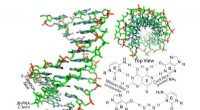
* The two strands of DNA are held together by hydrogen bonds between complementary base pairs (adenine with thymine, and guanine with cytosine). These bonds are relatively weak individually but numerous and collectively strong.
2. Temperature's Role:
* Heat provides energy to the molecules. This energy causes the molecules to vibrate more intensely.
* As the temperature increases, the vibrations become strong enough to overcome the hydrogen bonds holding the base pairs together.
3. Strand Separation:
* When the hydrogen bonds break, the two strands of DNA separate, resulting in two single-stranded molecules.
4. Other Factors:
* pH: Extreme pH values (too acidic or too basic) can also disrupt hydrogen bonding and lead to denaturation.
* Chemicals: Certain chemicals like urea and formamide can disrupt hydrogen bonds and destabilize the double helix.
Important Note: Denaturation is not always irreversible. Under appropriate conditions (cooling slowly in the presence of appropriate ions), the two single strands can re-anneal (re-form the double helix) by base pairing.
In summary: Heating provides enough energy to overcome the weak hydrogen bonds holding the two strands of DNA together, leading to their separation into two single strands.