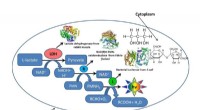
Here's how they do it:
* Activation Energy: Every chemical reaction needs a certain amount of energy to get started, called activation energy. This energy is like a "push" to get the molecules moving and reacting.
* Enzymes as Catalysts: Enzymes act as biological catalysts. They speed up reactions without being consumed in the process. They do this by providing an alternative reaction pathway with a lower activation energy.
* How Enzymes Lower Activation Energy: Enzymes bind to specific molecules called substrates. This binding creates a temporary complex that:
* Orients the substrates in a way that favors the reaction.
* Strains the bonds of the substrates, making them easier to break.
* Provides an alternative reaction environment that lowers the energy barrier.
Think of it like this: Imagine you need to push a boulder over a hill. The hill represents the activation energy. An enzyme is like building a ramp up the hill. The ramp requires less effort to get the boulder to the other side.
By lowering the activation energy, enzymes make reactions happen much faster, enabling life's essential processes.