Here's a breakdown:
1. Decomposition (Catabolism):
* This involves breaking down complex molecules into simpler ones.
* It releases energy, making it an exergonic reaction.
* Example: Glucose breakdown (cellular respiration) releases energy in the form of ATP.
2. Synthesis (Anabolism):
* This involves building complex molecules from simpler ones.
* It requires energy, making it an endergonic reaction.
* Example: Protein synthesis requires energy from ATP to link amino acids together.
3. Coupling:
* The energy released by the exergonic reaction (decomposition) is captured by the cell in the form of ATP.
* This ATP is then used to power the endergonic reaction (synthesis).
Key Concepts:
* ATP (adenosine triphosphate): The primary energy currency of cells. It acts as an energy carrier, delivering energy from exergonic reactions to endergonic reactions.
* Enzymes: Biological catalysts that speed up reactions by lowering the activation energy needed for reactions to occur.
Examples in Cells:
* Cellular respiration: Glucose is broken down (decomposition) to produce ATP, which is then used for protein synthesis (synthesis).
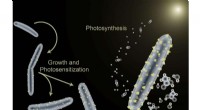
* Photosynthesis: Sunlight energy is used to synthesize glucose from carbon dioxide and water (synthesis). This process requires energy from ATP produced by the breakdown of water (decomposition).
In essence, cells couple decomposition and synthesis reactions to efficiently use energy. The energy released from breaking down molecules is used to build new, complex molecules essential for cell function and growth.