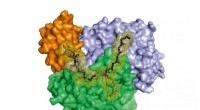
* What is a substrate? A substrate is the molecule that an enzyme acts upon. It's the reactant that the enzyme specifically binds to and converts into a product.
* How does substrate concentration affect reaction rate?
* Low substrate concentration: At low concentrations, the enzyme has fewer substrate molecules to encounter. This leads to a slower reaction rate as there are fewer opportunities for enzyme-substrate interactions.
* Increasing substrate concentration: As the concentration of the substrate increases, the rate of the reaction also increases. This is because there are more substrate molecules available to bind to the enzyme active sites, leading to more frequent enzymatic reactions.
* Saturation point: Eventually, at very high substrate concentrations, the enzyme becomes saturated. This means all the enzyme active sites are occupied by substrate molecules. Further increases in substrate concentration will not significantly increase the reaction rate because the enzyme is already working at its maximum capacity.
Key points:
* Substrate concentration is a limiting factor in enzyme-catalyzed reactions, meaning it can determine the rate of the reaction.
* Understanding substrate concentration is essential for studying enzyme kinetics and designing experiments.
* It is also relevant in various biological and industrial processes, such as drug design, fermentation, and food production.
In summary: Substrate concentration is a key factor influencing the rate of an enzymatic reaction, with a direct relationship at low concentrations and a plateauing effect at high concentrations.